
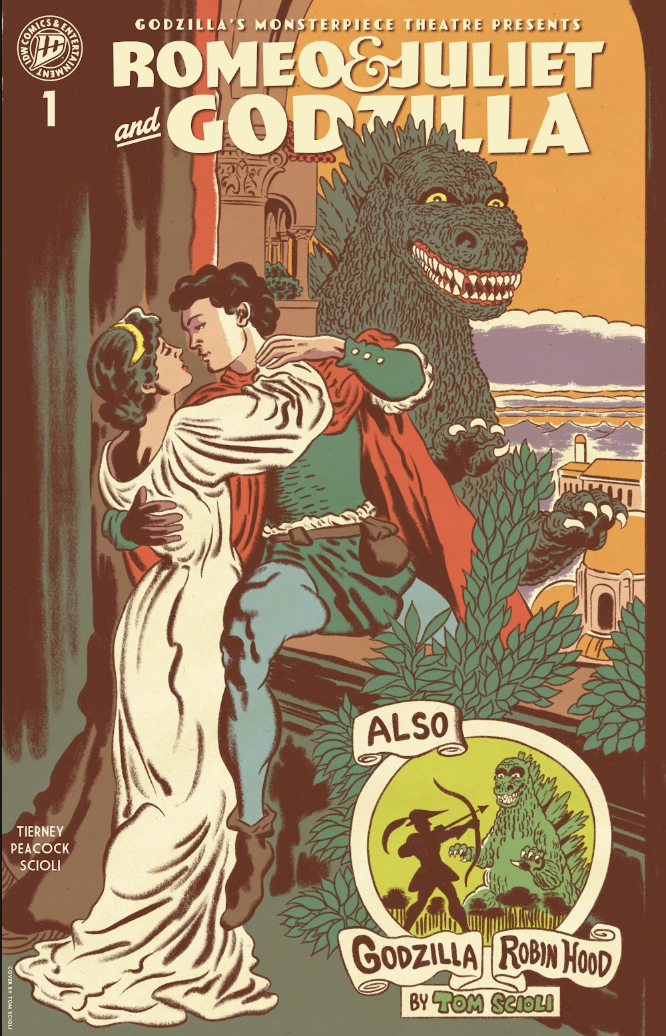
Cover Art for Godzilla’s Monsterpiece Theatre Presents: Romeo & Juliet and Godzilla - Written by Adam Tierney and Art by Sean Peacock. Godzilla Meets Robin Hood and His Merry Band of Outlaws is written and drawn by Tom Scioli. Cover Art by Tom Scioli.
“Retreat now beasts, and soon expire! I will dispatch of thee by blade and fire!”
Godzilla’s Monsterpiece Theatre Presents: Romeo & Juliet and Godzilla is the beginning of a new anthology series for IDW starring pop culture’s most famous kaiju. Last time around, Godzilla met famous literary figures in a mash-up of different stories, including The Great Gatsby and Sherlock Holmes, in what was a ridiculously fun three-issue run. This time around, IDW is taking it more issue by issue as Godzilla stomps his way through specific stories. First up is Shakespeare’s (arguably) most famous story: Romeo and Juliet! How was this issue? Does it live up to the high expectations set from the original series? The answer might not be what you think. I’ll also go over the short story included in the back of the issue: Godzilla Meets Robin Hood and His Merry Band of Outlaws! Let’s get into it. Spoiler warning now in effect for Romeo & Juliet and Godzilla.
The Art is Stunning
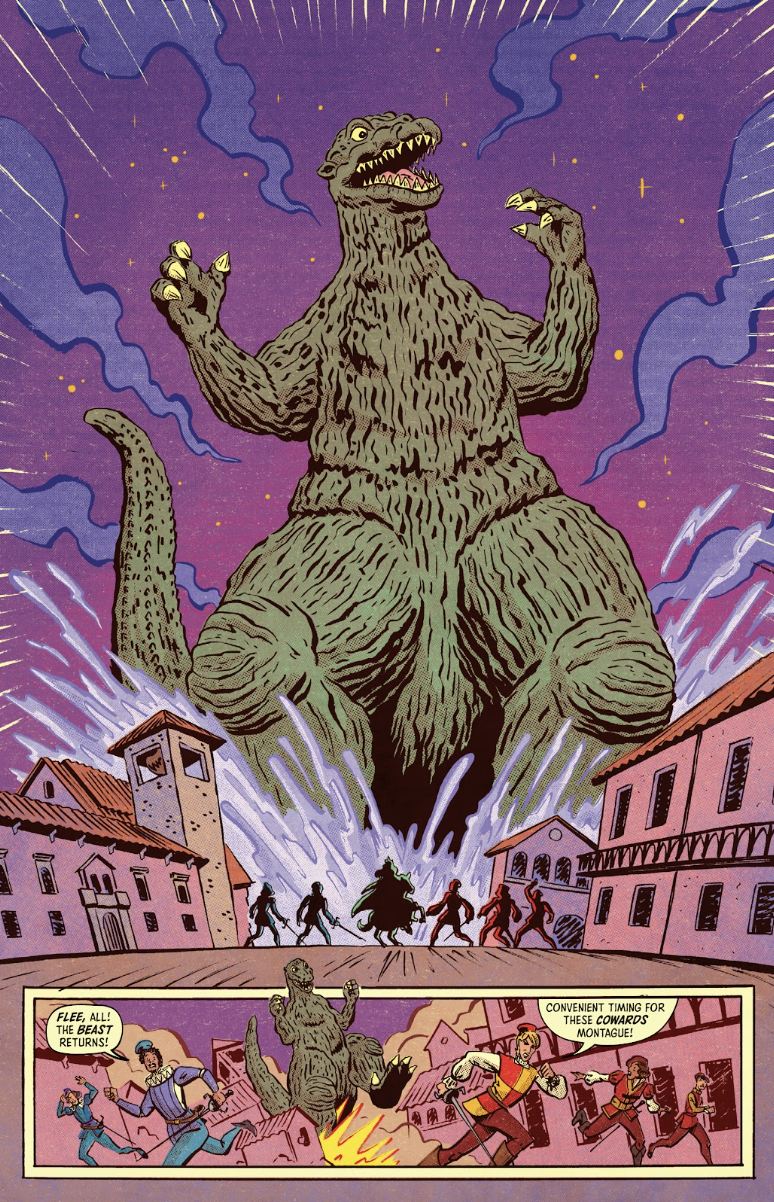
First off, I want to get into what I loved about Romeo & Juliet and Godzilla and, simply put, that’s the art. Artist Sean Peacock’s style is a seamless fit for this story based in 14th-century Italy, and it gives me some great classic art vibes reminiscent of comics from the Golden and Silver Age. The pages themselves are even dyed with a classic “yellowed-out” look that makes it look like it came from a box inside your parents’ house. The vibe of the art is just a great match for this take on a classic story. It’s little details like this that can really enhance a book and take its art to the next level. The designs of the characters are a highlight of the issue as well.
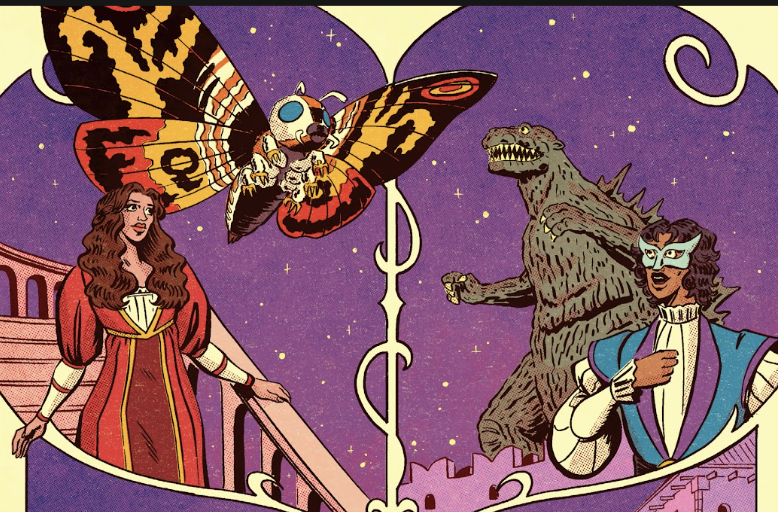
Peacock’s designs for Juliet’s family, the Capulets, and Romeo’s family, the Montagues, are great, and it’s never hard to tell how a character is feeling, with Peacock’s impactful facial expressions delivering on every page. In the original play from Shakespeare, Romeo and Juliet are around 13–15 years old, and I always found that a bit strange, so thankfully in this series, it’s clear their ages have been changed to fit the different vibe of this story. They both appear to be in their late teens or even early twenties, and I think that is a great design choice. The story comes off a lot better if these characters are a bit older rather than barely starting high school.
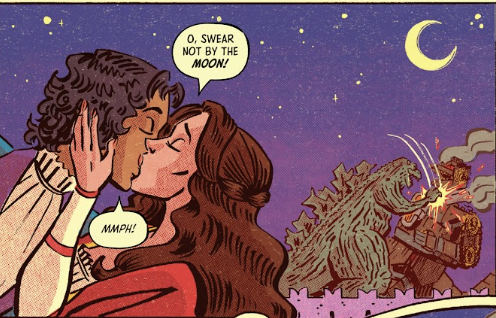
Besides the characters and the tint of the pages, Peacock’s art shines in other areas as well. The city of Verona looks great throughout the entire story and is a great backdrop for every scene, whether it’s filled with action between massive monsters or a quiet conversation between characters. The paneling, while most times it has the typical square and rectangular designs, has some standout moments throughout the story. Some of those moments include when a stylized heart-framed panel surrounds Mothra and Juliet on one side and Godzilla and Romeo on the other. Another scene with some great paneling is toward the end of the issue when Romeo ingests what he thinks is poison. As Romeo feels the “poison’s” effects, Godzilla continues his rampage throughout the city of Verona, and the entire sequence is paneled with what I’d call “quick cuts,” moving quickly back and forth between Romeo’s plight and Godzilla’s rampage.
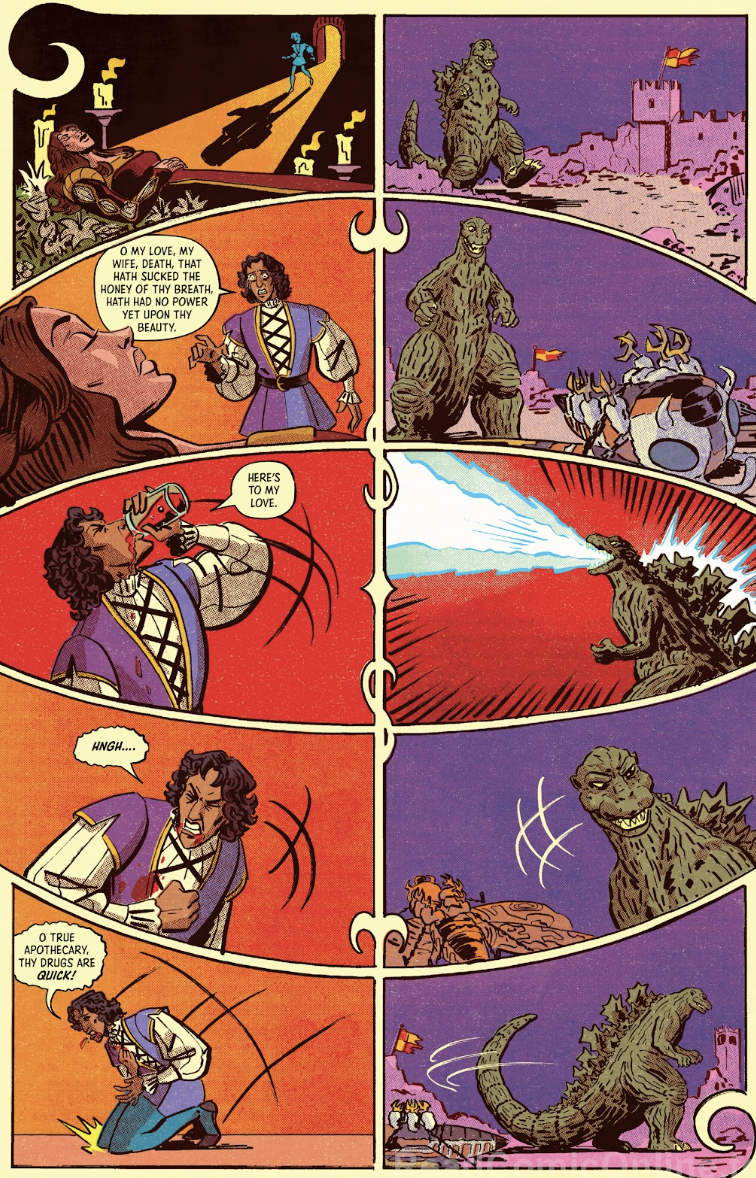
Of course, we have to touch on Godzilla and the other massive figures that show up in this story. Godzilla looks great every single time he’s on the page, from his initial splash-page introduction, to his rampages throughout Verona, to his battles with and against Mothra, to… well, you get the picture. He just looks great. The choice for Godzilla’s design in this story harkens back to his older Showa-era looks rather than the Heisei era, Millennium era, or MonsterVerse era, and I think that’s a design choice that works really well here. This is a story that takes place hundreds of years ago, and Godzilla’s more classic design is a much better fit than some of his newer ones would be. The weirdness and campiness of earlier Godzilla films match the tone of this story, which is just another reason the Showa-era design works really well here. Mothra’s design in the story is great and is your typical classic Mothra look, but it’s Peacock’s new take on a classic Godzilla villain that really stands out to me over the course of the story.
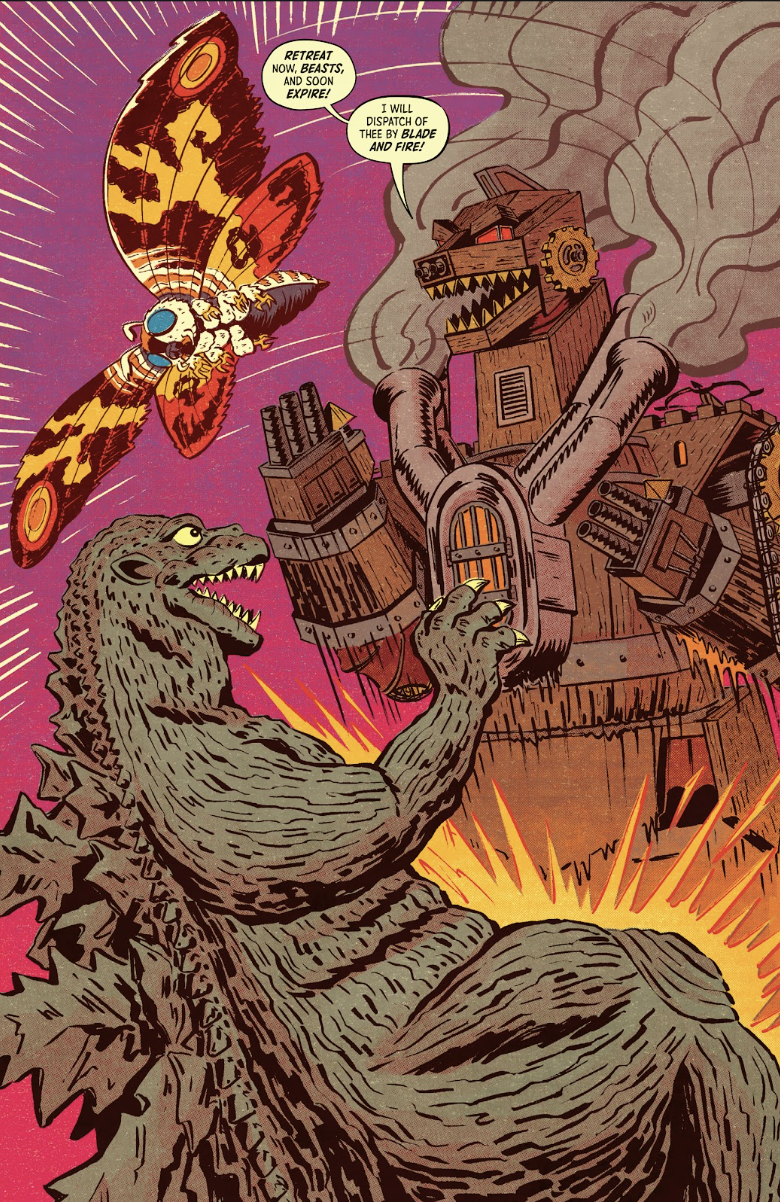
At a certain point in the issue, Mechagodzilla shows up, but he isn’t the silvery chrome Mechagodzilla from the films that everyone knows and loves. This version of Mechagodzilla is made of wood, steampunk-style gears and levers, and powered by a coal-burning furnace. It’s a really cool design that manages to fit the era of this book perfectly, and my only complaint is that we didn’t see more of it! Peacock’s art is the biggest highlight of this first issue of Monsterpiece Theatre Presents, and I look forward to seeing what else he has in store the rest of the way.
The Narrative, The Backup Story and My Rating
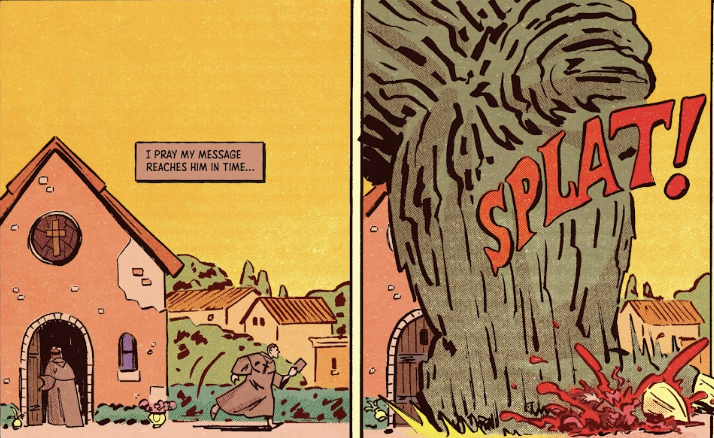
Now for the parts of this issue that just didn’t hit, and unfortunately that was the overall story. Writer Adam Tierney does a good job of adapting the story of Romeo and Juliet with the kaiju twist, but that’s ultimately where the problem lies. Tierney doesn’t nearly go as wild or crazy with this concept as I had been hoping for. Sure, Godzilla, Mothra, and WoodGodzilla’s battles are really fun to see, but a lot of the actual battles in the issue take place in the background of panels and ultimately aren’t the true focus. Godzilla’s impact on the love story of Romeo and Juliet isn’t as chaotic as it could have been, and he doesn’t have as much of a real impact as he should.
At the end of the story, Romeo takes the “poison” when he thinks Juliet is dead, which turns out to be a potion that turns him into a terrifying-looking kaiju. Just as you think we’re about to see a smackdown between a massive monster Romeo and Godzilla, it never comes to fruition, and Romeo meets his end in a ridiculous way. A massive battle between Romeo and Godzilla would’ve been a great surprise for the end of this issue and delivered for those hoping for more kaiju mayhem, and it’s a shame we didn’t get to see it.
Another narrative choice that didn’t work for me entirely was having the dialogue still be in the “olde English” style. This story feels way too Shakespearean for me and not enough Godzilla, and that’s really the biggest problem. Godzilla is around, sure, but he isn’t the real focus, and when I see a comic featuring Godzilla, that’s kind of what I’m hoping for. I didn’t need a retelling of Romeo and Juliet with Godzilla in the periphery; I wanted Godzilla to shake the foundations of the original story, and it just didn’t happen.
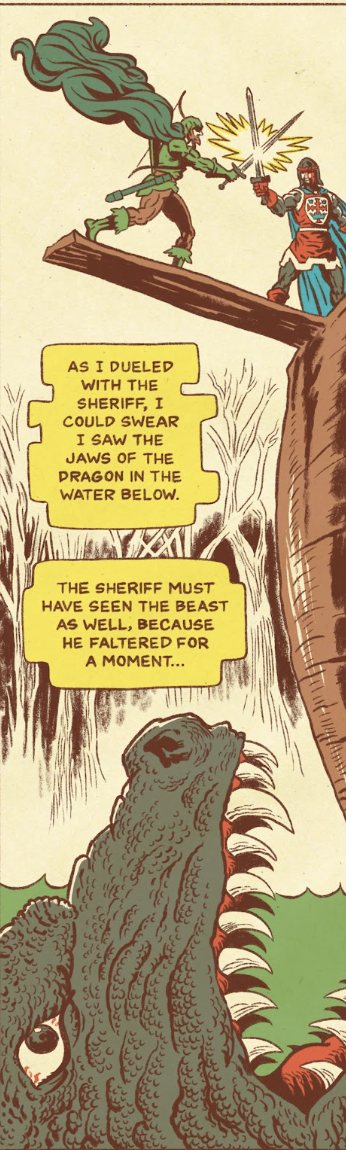
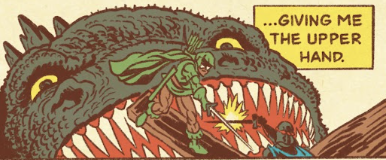
The short story included at the end, Godzilla Meets Robin Hood and His Merry Band of Outlaws, is a lot of fun. This story, written and drawn by Tom Scioli, is the first chapter in what I assume will play out over the course of the run of Godzilla’s Monsterpiece Theatre Presents. The art in this is killer, and there’s something a little bit off and a little bit creepy about Scioli’s Godzilla. It seems like Godzilla is going to have a big role in this one, and I’m excited to see it play out over the course of the next few issues.
Godzilla’s Monsterpiece Theatre Presents: Romeo & Juliet and Godzilla is an uneven start in Godzilla’s new rampage through classic literature. Sean Peacock’s art is fantastic with great designs throughout the main story and Tom Scioli’s Godzilla Meets Robin Hood backup story is really cool. Unfortunately, the main story’s narrative doesn't reach the chaotic heights I hoped it would but I’m still intrigued by what lies ahead.
Rating: 6/10